Showing posts with label gedi. Show all posts

Sunday, May 5, 2013

The Power of Teaching~

Reflecting back on the entire semester of GEDI and PFP classes at VT, I sense that my intention and attitude towards teaching have elevated from the desire to help others (students) find beauty in engineering in a way that I have found, to something even higher. And, that something higher is ineffable enough for me not find a noun suitable for it. I can try adding adjectives to what teaching means to me right now: a purpose for my awareness in this lifetime, something more akin to worship and the journey to higher self.

In My Past-Life

(Pre GEDI and PFP life): I have been a self-studying self-built person for most of my life. Most teachers in my undergraduate education to me were like the priest in a temple/church/mosque/anything-else to whom I pay respect and pretend to listen. My real spiritual development happened outside the holy-moly walls of the pious shrine/building. 

That is how most classes were for me- I attended them (mostly).  I tried not to sleep. I pretended to listen when awake. I tried not to read something else. (Facebook etc were not the thing yet.) I freaking tried all of that above. My real learning happened when I pored into books in my hostel room, in library, in the park, in our athletics stadium.

And, that is exactly the reason why for a long time I have held teaching as a pious profession. My belief has over time reinforced itself with the plethora of note-reading, no-eye-contact-please teachers that I have had. The more my teachers  performed  sadly in their theatrics and interest in teaching, the more convinced I became. 

The reason for this reverse reinforcement was this: It appalled me that the beauty I find in subjects is something that most of my class will probably never experience, because most of them need teachers to show them the beauty. 

So, I would take time and teach my classmates. And, the fire (and the zeal) built on itself.

This Life:

Now I am almost towards the end of this wonderful GEDI and PFP experience. My intention for teaching has risen over the desire to share the beauty as I perceive it to instead waking the genius in my students (and not transferring to them my genius image of the subject.)

I am thrilled. I am inspired. The power of teacher is not only in showing students what the subject is and how freaking exciting and beautiful it can be, but also in awakening the genius in our students. It is in helping them be more self-aware. To help them come vis-a-vis to their self-potential and self-inspirations.

Teachers are powerful. They have this magic wand that they can use to make the future stronger. They instill seeds in their students. (Seeds of what, everyone in the class chooses.) They sit in positions where they can make great service to society as they try to live with high ideals (/model them.) Think Henry L.I.V. Derozio.

Teach, Prey, Love:

In most Indian systems of philosophy the teacher (Guru) is often referred to as a blessing or someone above God. In fact there is a beautiful couplet translated as:

"Guru and God both are hereto whom should I first bow
All glory be unto the gurupath to God who did bestow"


Oh my gawdliness! I can not wait to get the chance for waving my wand in a formal setting! 


Friday, May 3, 2013

PBL: Open ended and close ended~

Having done the PBL and watched the presentations of other groups, I am Thrilled!
Wow! What amazing topics! How amazing ethical, social, financial dilemmas! How very unique structure of the PBLs and layout for assessments. Congrats fellow GEDIs! I am impressed and hopeful that we will all go ahead to become truly the teachers of our students, for our students, and by our students.

Open-ended and Not so open ended PBLs:

I want to broach the topic of PBLs being open ended or close ended. Which is better? Probably this in itself is an open ended question :)
So, I will just focus on what I understood from our presentations (not including the readings) on advantages of both kinds of PBL.

Advantages of Close-ended PBL:
Subjects that need to train students in at least in part finding the right answers can benefit from close-ended PBL. We ofcourse dont want bridges and airplanes with faulty designs. In disciplines where right answer does exist, close ended PBL serve the dual purpose of engaging students through its story and thereby guiding students to arrive at the right answer.
Advantages of Open-ended PBL: 
Oh! And yes when I want to fire students' creative thinking, and imagination, and I want to encourage them to 'push the envelope', of course I will choose an open-ended PBL. Because sorry ma'am and sir, there is no correct answer! It is a continuum with no ends. It is often conflict of interests, ethics, engineering challenges, public welfare, and arts! 
It is beautiful! And we certainly need more of such PBLs in our class rooms!

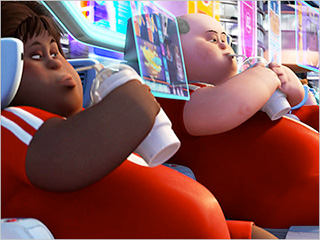
And, I want to end this blog with the picture below that reinforces the abilities of our students and our future! Great job GEDIs! It was a pleasure to be in same class as you all!


Monday, April 22, 2013

Contemplative Practices Part 3 (Engineering and Science Higher Ed)

Last weekend, we had a wonderful conference at Virginia Tech, 'Contemplative Practices for a Technological Society'. Here is summary of my notes that pertain to including contemplative practices in higher ed (engineering and science only) from that conference:


(Note: I am in process of writing down all my notes from this conference in a separate blog and will share it here in this post, in this space, as soon as it is ready. This conference was indeed an overload of wisdom, precious tools and experiences!  Bliss!)

In Engineering Curricula:


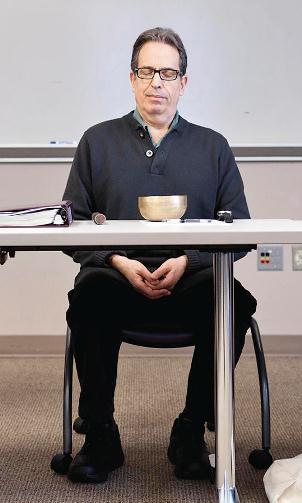
1. Dr. David Levy, Univ. of Washington, of  "You're distracted! This professor can help" fame was one of the invited speakers and panelist for this conference. He is incorporating mindfulness in his students by helping them be more aware of their behaviour and efficiency as they multi-task through a course that he offers.


( Fellow GEDIs, remember the test that Dr. SF made us do in our GEDI class on multi-tasking? 'write series of unusual numbers {subtract 7 from 100 and so on...} and answer questions based on what she was reading at the same time?)

Well, when Dr. Levy realized the subtlety of multi-tasking and task-switching, he plunged into researching ways to increase productivity and wellness as we continue to switch tasks rapidly. He found his answer in using techniques like meditation, being mindful, having more self-awareness. 

He shared his story that when he left his thinking-intensive job and came over to academia, he realized that he was not really thinking deeply, (the way he did in his previous job.) Thereupon, started his journey onto finding task-switching as a challenge and mindfulness as a tool. 

He designed and conducted a study (snapshot on left) that showed subjects were more efficient/productive, less stressed, happier at doing a secretary-sort of high-stress work, which was designed to demand intense task-switching, when they were trained in mindfulness.
Here was a scientific proof for what many people already preached and practiced  Dr. Levy then went ahead and devised a course for helping students become more mindful of their activities. (More about this course, and its story here. It is definitely worth reading + I am ensuring that I do not reiterate what has already been written there, despite being talked about at the coference.) They observed that when people are mindful, they are less likely to be distracted by interrupting emails, focus longer, are happier with their work, and more productive.

2. Dr. Roop Mahajan, Virginia Tech, held out a visionary challenge to engineering education
system. He emphasized on the role that contemplative practices play talked about completely transforming engineering education by offering degrees in Mechanical Engineering and Mindfulness, or XYZ engineering and Mindfulness. He took the example of Mechanical Engineering and laid out a curricula for Mechanical Engineering that was actually in compliance with ABET and was flexible to accomodate each student's interest. Wooh! Imagine Department of Civil Engineering and Mindfulness!

He emphasized how companies too realize that there productivity depends a lot on how focussed and well their employees are. He justified that such an engineering degree would be a cutting edge sword for any university that takes the lead and starts offering them.
The discussion then went onto stress that Univs offer experience that MOOCs dont. And, it is high time that mindfulness is added that experience!! 

3. Diann Brei, Design Science, Univ of Michigan: Dr. Diann started with admission that she wears too many hats and believes that she does not practice mindfulness. However, she is convinced that Tree of Contemplative Practices and practice it.
mindfulness is important and has the potential to be very useful for her students, and so she does introduce her students to contemplative practices and infact, one of the assignments they have is to pick one activity from the tree and practice it.
As Program Chair of Design Science centre at University of Michigan, she ensures that mindfulness is practiced in there. 
One extremely striking practice that she talked about and is proud of is bringing in liberal arts and science together. She talked about how every science/engr. based research group under the wing of Design Science has at least one 'arts' graduate student. This has to her experience blown off the perceived limits of creativity and has enriched the experience of everyone in Design Science!


This is all for now! In Part 2, I will share my notes of contemplative practices in higher ed that are not limited to science and engineering!

Namaste!

Wednesday, April 3, 2013

Wish we had a shout-out forum~

Twitter style or FB style for our PFP class!

Here is a conference/workshop thingy that I found and I want to share with our awesome PFP and GEDI classmates! (Following our energy-filled discussion in last PFP class.)
This workshop also introduces the full-of-mind techniques into and for higher-ed and other professions.


http://www.cpe.vt.edu/cpts/schedule.html

Disclaimer: This is not a blog entry. It is just me shouting-out from my isolated (and connected) satellite tower. The view from here is beautiful btw! (Wherefrom is it not?)


Friday, March 29, 2013

On Midwives and Wisdom of Unconscious~


Teaching, to me, is an art. And like some other art forms, I associate tremendous sanctity with it. It is a profession of practicing ethics, discipline, and love, while facilitating students to discover knowledge/concepts. 


There is a theory in 'Karma Yoga' that has also been believed in by some psychologists/psychiatrists like M. Scott Peck, Carl Jung - "wisdom of unconscious".


The theory goes on like this for me:

Our un/sub-conscious is all knowing, supremely fast and efficient in perceiving, calculating and predicting. All the knowledge and wisdom that we can gain at any instance already resides within us. 


Like the baby that is inherently present inside the womb of the pregnant female! She can not birth a baby that is not inside her womb already!

And, so is with knowledge:  At a given instance (x,y,z,t,...) one can not learn what one's un/sub-conscious does not know already.

Learning then becomes the process of allowing the subconscious to rearrange its knowledge in a way that is comprehensible to our loud, chattering conscious minds. 

(And learning is often tough, just like birthing a baby. For both involve bringing out what is inside in dark out onto the loud chattering perceivable/thinkable existence. )


Midwives can only facilitate the process of birthing. They can not make a baby out of this air. She is not the source. 


And, teachers can only facilitate the process of learning. They can not impart any knowledge to students. 
They can only help students to discover themselves, their wisdom, and their knowledge - through their words, engagement, or any other tool that they can employ. 

In the Classroom: 

Somethings that we heard in our GEDI class and elsewhere (I am heavily paraphrasing it):

1) Some students are just not ready and engaged no matter what we do. 
2) Teaching is a two way process- both students and teachers have to be ready.
3) Sometimes it has to click. We might 'know' (have memorized by rote) something, but the knowledge has to 'click' to actually 'know'.


Some stuff we might have experienced in a classroom setting:

1) The moments in which learning really happens- whether it is during brief moments in a class, or a homework that is due in 20 minutes. Those moments are so like Csikszentmihalyi's flow experience. Silent.
2) The 'aha' moment!  As if we always knew the truth (the knowledge), but did not know that we knew! Or, never thought of it that way!

To me these are multiple lines of evidence that we only learn what we already have in our shadows and   quiet shelves of our brain. We can only learn what we are ready to learn. 

And, then to me, the teacher is no more than a mid-wife - a facilitator. That is it! 

A very important facilitator though :=)


Thursday, March 14, 2013

Mine, Your and Other English-es

I was browsing through the multi-lingual world of internet, looking for the 'correct way' of pronouncing some English language words. What 'I' (believe that I) found is the following:


Basically, there are two ways of pronouncing most English words 'correctly'. One is the way some Britons do, and other is the way some United States of America-ns do. 

Now, I would happily give leeway and polite authority to Britons, as they sort of taught the language to the 'commonwealth' and can be attributed as being the leading cause for the wide-spread use of English language today. 

Dear USA-ans - (Is it fair that there is no unique, easy to say- way of referring to citizens of USA? Even Venezuelans are Americans in a way- their continent is also America, albeit a bit 'South') - so, USA-ans lead us in all ways in our universe. And, they definitely do so, when it comes to the 'correct' way of pronouncing English words. 

In an alternate reality:

On this truly democratic (and truly biased alternate) earth:


Being more than one-third of human population, Chinese and Indian pronunciation are the two widely accepted as standard pronunciations of English language.
(I wish to clarify that this is merely a hypothetical drama/imagination to highlight the absurdity of trying to correct individual accents, instead of recognizing the amazingly diverse heritage that we are creating/have created!)


Saturday, February 16, 2013

Once Upon a Time ...

... there was resistance to change.

Circa 8000 BC

Location: Somewhere in Egypt


Modern historians estimate that Bes often 
ran about 300 miles at stretch. On the 
way he would find food, water, mates, 
and friends! However, they note that his 
type (hunter-gatherers ) eventually gave 
up their ways for the more 'advanced' life 
of agriculture based nomadic humans. 

Bes was confused. The news had reached him. Others were changing- they were forcing seeds to grow in one place. And then they never went anywhere else, apart from occasional half-a-day long hunting trips. Just half-a-day of running and sneaking! It must be comfortable and easy!

But Bes could not understand it. Staying in one place for any length of time perplexed him.
So wedded he was to the wind that hustled in his ears when he would run around for days, hunting and gathering! Each day he reached a new place and after few days the landscape would have change completely!

He did not want to lose this human touch of his existence! 

Though the early man thought of the life of farming 
based nomads as secure and easy, yet to modern 
humans it is an unimaginable, absolutely inhuman, 
punishment and torture.


Circa 1778 AD
Location: Somewhere near East Lothian, Scotland

Ceard had had no work for weeks! His impoverished frame belies both his strength and anger.  The threshing season used to be the season of work! But as it turned out - the son of Meikle had invented some design that did all the threshing. His lord did not need him and others like him, anymore. Fortunately Ceard had also heard about a huge house in East Lothian, where they needed people from farms, to work till they turned black. They were getting paid there!

Ceard was utterly perplexed. He soon got used to the demanding labour required in that huge house of work. But, what shocked him was this- thousands of people living so close to each other and working together in the same house! He missed 'his space'.

He did not want to lose that human part of his existence!
As it turned out later, conditions of workers deteriorated rapidly and Ceard had
no option except to  accept it and numb the pain of leaving vast beautiful farms
behind. Historians remark that industrialization was indeed a turning point for
modern human society.


Circa 2013 AD
Location: TORG 1060, Virginia Tech

Adult humans were hustled together as students in a hall and were learning from the engaging Dr. S. F. on how the expectations of students and society from its teachers was changing. Technology was rapidly evolving their day to day life. Gagi, like many other students, was just introduced to platforms like blogging, gaming, online networking and was perplexed. 

It was not the writing part and the time that these online activities took that perplexed her. She could not understand how and why the virtual world had gained so much importance. Her colleagues were reporting news of families texting each other on dinner tables. It offended her senses that young child-lings were handed I-pads and other tablets at such a tender age. 
Whatever happened to the real human interaction!
She held dear to the belief that the university system will not collapse under this fast expanding virtual world. Students will always need the face to face human interaction with both peers and their teachers. She knew that MOOCs could only do so much! Engineering needs labs after all! She refused to believe that one day we will stop having human to human interaction. If we did stop interacting, she was sure, we would head towards insanity!

And, she did not want to lose that sane, human touch of her existence!


Circa 2032 AD
Location: 41.138.127.255, Burkina Faso

"Thanks Dr. S. for having me in this GEDI class! 
Hi all!
I am Rachid at 41.138.127.255. I am graduate student in Micro-fluidic Devices Engineering at Virginia Tech. 
Favorite music: tchk tchk sound of my laptop keyboard - lol! I am not into music really!

Some interesting things about me that you would not know otherwise: 
I have two fun-facts that I want to share-
One: I am geographically located in Ouagadougou, Burkina Faso. 
Two: Along with my research in medical applications of micro-fluidic devices, I am also getting hands-on training on remote Thoracoscopic pulmonary surgeries. The funny thing is that though we may never meet in person, someday I might remotely operate on some of you or someone close to you!"

As she heard this, Jameena at 1.39.255.255.1, who was geographically located in India, flinched. 
(Some sections in India were still lagging behind in the new era of computerized medical services.)

Whatever happened to a real surgeon, who she could meet before her throat was cut open?

It was not the collective wisdom of the entire medical research in the current computerized medical system or the computer operating skills of Rachid that she doubted! She knew that a surgery team of humans was million times more likely to make an error than the completely automatic and  intelligent medical system. 

It is just that, in the event of facing a knife, she was banking at the possibility of a real human interaction!

She did not want to lose that human touch of her existence~


Sunday, February 3, 2013

The Good, Bad, and Ugly of Scientific Blogging

I write this blog in response to some wonderful points brought up in Brandon Peoples' blog here.

It is heartening for me to see so many people blog over their discomfort or doubts over blogging in the GEDI and PFP series:
a) I am not the only one who is not so comfortable. Yay!
b) (This is my favorite interpretation- ) we all are stepping out of our comfort zones. We all want to be better teachers and persons. And as M. Scott Peck would say million times - when we extend our actions for other's spiritual growth, it is love. It fires my hope that our students will be loved and believed-in by their teachers! What else can I ask for?

Now coming to the issue of scientific blogging. It is slightly more complicated. Science is a wonderful tool. It is powerful and beautiful! And, with great power and beauty come great responsibility and lust. 
The inappropriate use of scientific journalism is the leading cause of expensive urine (pardon me) in our waste water drains and profits of our supplement and detox industry. It hurts me to even think of the MMR scare!
Scientific journalism is a scary thought! Blogging-scientists is a scary proposition!


Here is to the good, bad, and ugly of scientific blogging:

The Good:

a) Disseminating our understanding of phenomenon is our utmost responsibility as scientist. Science is a collective endeavor, it feeds on collective efforts and criticism. It will be quite a shame if we under-estimate the value of public understanding of science.

So, dear scientists and engineers- go ahead and talk with all your passion about the wonderful world of garbled equations and greek notations!

b) Better understanding of science will empower public to tell bad science from appropriate science. This is exactly what Ben Goldacre has dedicated his work to. (Salute to his never-ending trust in capacity of general public to understand nuances of scientific rigor!)


The Bad:

On another note- here is my discomfort over using blogs to disseminate science. It is so easy to misuse scientific studies and present them in biased light. Most on-the-news science stories are living example of scientific journalism gone eerie (usually for exploiting public perception of science as a black box where magic happens. Pop a pill and you will be great. Drink kool aid and ... )

So, much to the budding entrepreneurs, health and wellness experts, who so easily misuse and mix thorough scientific research with 'research done on internet'! (I love wikipedia- no offense!)

The bad of social blogging on science is this- misuse of these platforms to extend ones financial or social gains. This is so rampant in our society currently that I am scared of blogging about my work and my 'field of expertise' - what ever that means.

The Ugly: 

Things can get really ugly really soon.
As an environmental engineer I find myself torn. The onus of sharing my understanding with rest of human society is on me. But, this the onus comes with the risk of my narration (and not good-enough writing skills) leading to mis or incomplete-interpretation and bad science practices.
For example - here is to the recent scare of antibiotic resistance gene in purple pipes. It was an important piece of information, which was good to acknowledge and share with public. But, the needless economic after-effect and public scare were sad consequences of poor scientific journalism by our news and blogging agencies.

It is a fine line that we need to tread as scientists and engineers, and I imagine that would be an art. And there is no learning in art without decades of practice.
So, despite my reservations, I have to face the probability of probably practicing bad-science (despite my good intentions) and start blogging about my work and my understanding of it.


Teacher, are you ready?

"When the student is ready the teacher appears." 

And, so goes an Indian saying.  Or did we get it all wrong?
In this paradigm the absence of a formal educator is not an acceptable excuse. When one is ready to learn, learning is found, and the teacher appears. The onus is on students, and the role of teacher is clearly undefined.

( In a teacher-deprived society I admit it helped me navigate through education system of our rural pocket in India. )

But, now the tables have turned! I am trying to fit into the shoes of a teacher. And, man! It IS a difficult pair of heels to wear! There are so many inconvenient questions to ask- Will I be able to become a good teacher? Would it be the glassy stare or the precious awe that I will see on faces of my students?

Worse still, what if I continue lying to myself and believing that I am a good teacher as I turn blind to the glassy stares?

Eventually students will lose their innate desire to be 'ready' to learn because there are no 'teachers'.


Once upon a time ...


Remember the tale of those legendary people (-whose stuff is made of legends- and) who got their first email address when they reached a university. I am one of them.

I am taking the risk/liberty/whatever - of giving out this tmi on our blog to make a point. And, that point is this- for a very long time I stuck in my comfort zone, still aiming to 'teach' as I refused to acknowledge that the lives of my future-students is tremendously different from the life that I had. Inertia is so convenient (and this is the point) and I am guilty of it.

Now, this GEDI and PFP change is forcing me to shake-off all the notions I have held golden about education system.


Here is an existential crisis-  For am I still a 'teacher' when my students are not learning anything from me? The very identity of a teacher is a function of effective transfer of skills to the students. So when my students fail to learn, it is me who fails to teach. And, I am reduced to a 'zombie' lecturer- who speaks when no one is listening! Wow! Teaching is difficult!

All my hopes for my bewildered self stem from what Dr. Gardner Campbell said in our GEDI class-
" When you are confused, you learn. "

I am confused and it is time when the teacher-wannabe learnt about her students!


For when the teacher is ready, students appear!